


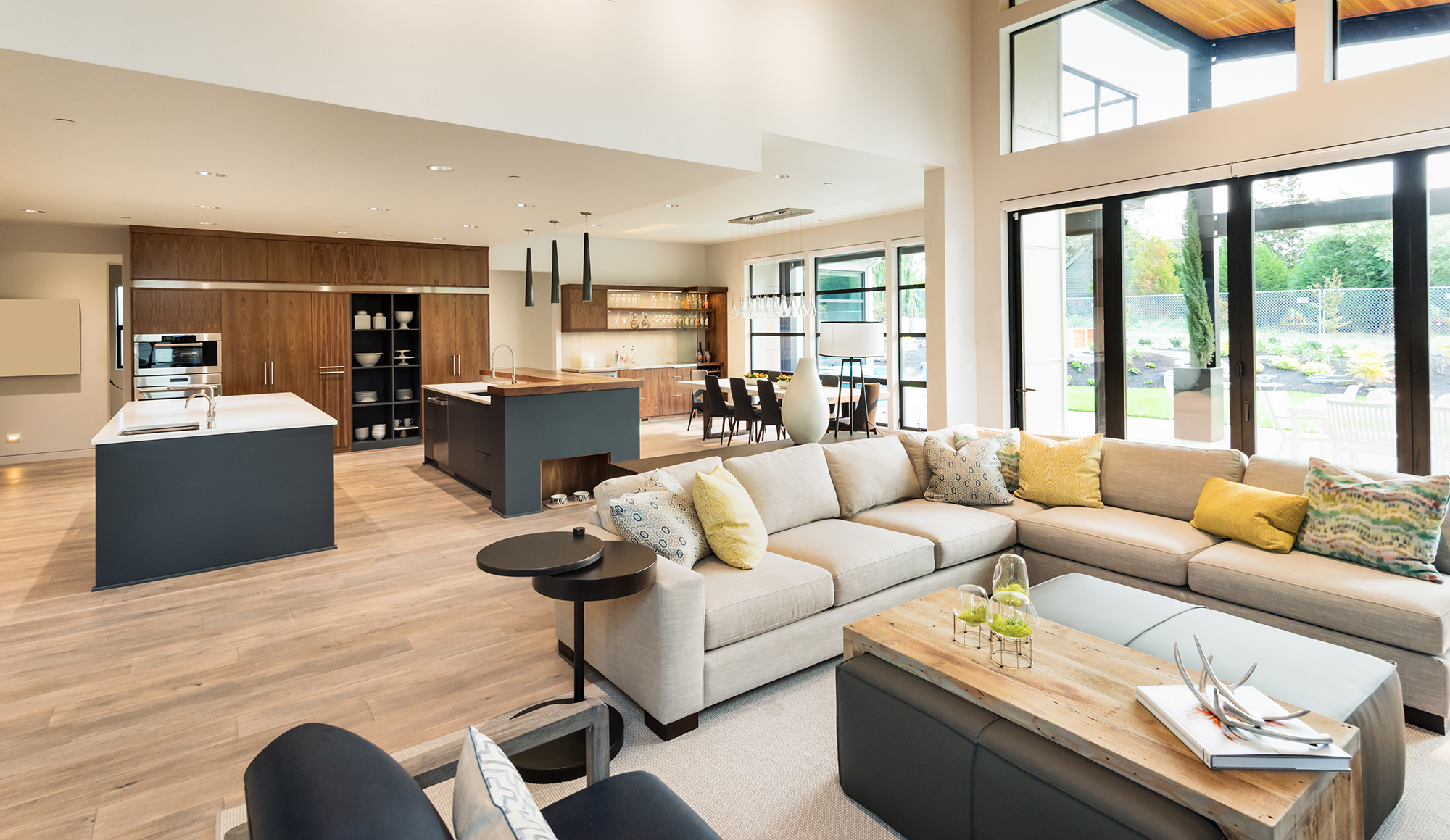
Mixing hardwood and vinyl is one of the smartest strategies in SWFL: you get hardwood warmth where it matters most and waterproof practicality in the high-traffic, high-risk zones. The key is making it look designed, not accidental. At Abbey Carpet & Floor at Patricia’s in Cape Coral, we guide homeowners through this exact planning step because the decisions you make before install determine whether it feels cohesive.
Why this combo works
Bedrooms benefit from hardwood because it feels warmer, calmer, and more “quiet luxury.” Living areas, kitchens, entries, and laundry zones benefit from vinyl because:
spills happen,
sand and grit enter from outside,
traffic is higher,
and furniture movement is constant.
This layout aligns materials to real stress patterns in a home.
Rule 1: Match undertones, not just “light vs dark”
A common mistake is matching “light oak vinyl” to “light oak hardwood” by name. Instead, match undertones:
warm (gold/red),
neutral,
cool (grey/green).
Florida light is intense and can shift perceived undertones dramatically. The safest premium approach:
choose one dominant undertone and keep both floors in that family,
then differentiate by texture and finish rather than color extremes.
Rule 2: Decide which floor is the “hero”
Pick one material as the hero and the other as the supporting actor.
If hardwood is the hero, keep vinyl visuals simpler and quieter.
If vinyl is the hero (open concept), keep bedroom hardwood tone aligned and avoid strong contrast.
A premium home usually has a clear hierarchy, not competing statements.
Rule 3: Plan transitions like architectural details
Transitions are where “patchy” happens. A good transition looks intentional, like a trim decision.
Best practices:
Use the right transition profile (T-mold, reducer, threshold) based on height difference.
Align transitions with natural breaks: doorways, cased openings, changes in ceiling treatment, or cabinetry lines.
Avoid slicing through open sightlines (like the middle of a hallway run).
If you must transition in an open area, treat it like a design line: straight, clean, consistent, and placed where it visually makes sense.
Rule 4: Keep plank direction consistent where the eye travels
Direction matters. In many homes:
Run planks in the direction of the main light source or longest sightline.
Keep direction consistent through major connected spaces to reduce visual “chop.”
Bedrooms can differ if they’re separated by doors and hallways, but the more open the plan, the more important continuity becomes.
Rule 5: Manage thickness and height differences upfront
Hardwood assemblies and LVP assemblies can sit at different heights depending on:
plank thickness,
underlayment,
moisture barriers,
installation method (glue-down vs floating).
Premium feel comes from:
flush or near-flush transitions,
no toe-stubbing ridges,
and clean baseboard lines.
This is where professional measurement and subfloor planning pay off.
Rule 6: Use trims consistently (baseboard, quarter round, casing)
Inconsistent trim choices scream “afterthought.”
Use the same baseboard style throughout if possible.
Avoid quarter round in one zone and none in another unless it’s a deliberate design language.
Keep caulk lines and paint sheen consistent.
Rule 7: Balance acoustics room-by-room
Bedrooms often want quieter footfall. Living spaces want durability. Underlayment choices can help, but too-soft underlayment under click-lock LVP can create bounce. The premium approach is:
choose underlayment for the correct zone (sound where needed, rigidity where needed),
and ensure it matches the LVP manufacturer’s requirements.
Where this strategy shines in SWFL
Primary suite + guest rooms: hardwood for comfort and resale appeal.
Living room + kitchen + hallways: vinyl for spills, sand, and traffic.
Entryways: vinyl to take the grit beating.
Laundry/pantry: vinyl for leak risk.
Hardwood in bedrooms and vinyl in living spaces can feel intentionally luxe when you plan undertones, transitions, direction, thickness, and trim as a single system. Visit Abbey Carpet & Floor at Patricia’s in Cape Coral to see hardwood and LVP side-by-side under real lighting and map a layout that feels seamless. We serve Cape Coral, Fort Myers, Iona, North Fort Myers, Sanibel, Bonita Springs, Estero, Naples, Punta Gorda, and Fort Myers Beach. Contact us or stop by to schedule an estimate and get a room-by-room recommendation that fits your home and your life.


