


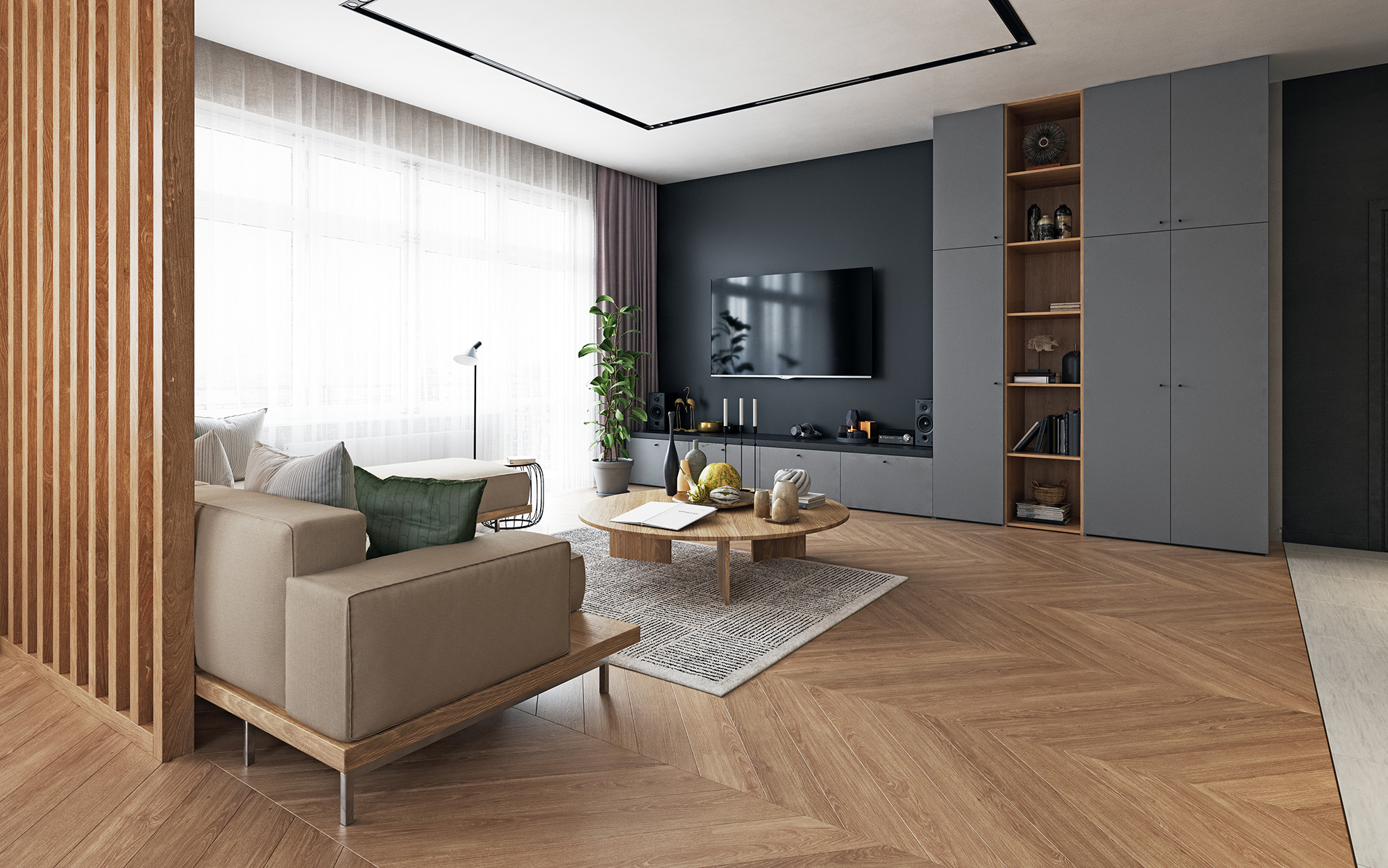
Homeowners at Abbey Carpet & Floor at Patricia’s often fall in love with a herringbone pattern in a photo, then hesitate once they hear it costs more than a standard straight lay installation. That hesitation makes sense, but it helps to understand exactly where the added cost comes from before deciding it is not worth it.
In most cases, the extra cost is driven almost entirely by labor and material waste, not by the vinyl plank itself.
Where the Extra Cost Actually Comes From
Herringbone patterns use short, often rectangular planks laid at 45 or 90 degree angles to form a zigzag design, which means significantly more cuts than a standard straight lay floor. Every cut plank that does not fit perfectly becomes waste, and herringbone layouts typically run 10 to 20 percent higher material waste than a straight installation.
Labor is the bigger factor. A skilled installer needs more time to lay out the pattern correctly, keep angles consistent, and maintain straight sightlines across a large room, especially in open concept Florida homes where a great room might flow directly into a kitchen or hallway. Expect installation labor to run notably higher per square foot compared to a straight lay job with the same vinyl product.
What You Get for the Extra Money
Herringbone is one of the few flooring patterns that reads as a genuine design upgrade rather than just a different color or plank width. It draws the eye and adds visual texture to a room, which matters most in spaces that would otherwise feel flat or plain, like entryways, foyers, and open concept living areas.
It also tends to make smaller rooms feel more dynamic without requiring a change in wall color or furniture. In a market like Southwest Florida, where buyers increasingly expect upgraded finishes, a herringbone entry or great room floor can be a genuine differentiator if resale is part of your thinking.
Where It Pays Off the Most
Herringbone makes the most visual and financial sense in smaller, high visibility spaces rather than sprawling square footage. Entryways, foyers, powder rooms, and defined dining areas are ideal candidates because the pattern gets full impact without the cost scaling across hundreds of extra square feet.
In a large open concept great room, herringbone can still look stunning, but the cost difference becomes more significant simply because of the larger area involved. Many homeowners choose to use herringbone as an accent in the entry or a transition zone, then continue with a straight lay of the same plank into the rest of the open floor plan to control cost while still getting the design impact where it matters most.
Questions to Ask Before Committing
Before deciding, ask your installer for a side by side quote on the exact same vinyl plank in both a straight lay and a herringbone layout for your specific square footage. This gives you a real dollar comparison rather than a rough estimate, since waste percentage and labor time vary by room shape and plank size.
It is also worth asking how the installer plans to handle transitions into adjoining rooms, since a herringbone pattern that stops abruptly at a doorway can look unfinished if it is not planned out in advance. A good installer will walk you through the layout plan before a single plank is cut.
Whether herringbone is worth it really comes down to the room, the layout, and how much of your home you want the pattern to cover. The team at Abbey Carpet & Floor at Patricia’s can price out both options side by side so you can make the call with real numbers in hand.
We proudly serve Cape Coral, FL, Fort Myers, FL, Iona, FL, North Fort Myers, FL, Sanibel, FL, Bonita Springs, FL, Estero, FL, Naples, FL, Punta Gorda, FL, and Fort Myers Beach, FL with flooring design and installation. Visit one of Cape Coral, FL to see luxury vinyl flooring patterns in person, or contact us to get a quote for your space.


