


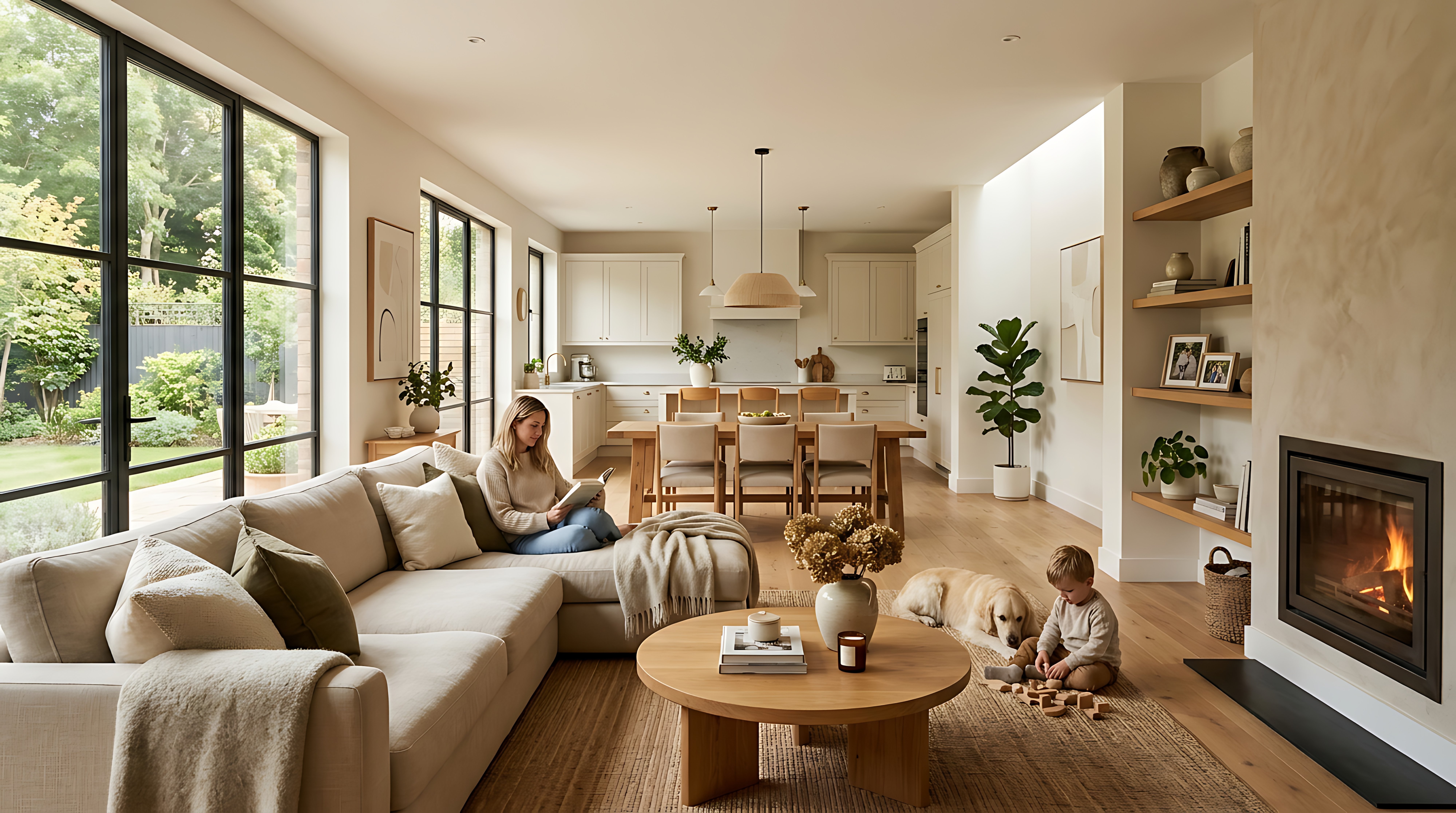
At Abbey Carpet & Floor at Patricia’s, this is one of the most common conversations we have with families who love the look of hardwood but worry about how it will hold up. The good news is that hardwood can absolutely work in a busy household. The key is understanding a few specific factors that actually determine durability, rather than relying on general assumptions about hardwood as one single category.
Once you know what to look for, comparing options becomes much easier and far less overwhelming.
Wood Species Plays a Bigger Role Than Most People Expect
Different wood species have different natural hardness levels, and this directly affects how well a floor resists dents from dropped toys, dog nails, and everyday foot traffic. Oak and hickory, for example, are naturally harder and more resistant to surface dents than softer species like pine or cherry.
This does not mean softer species are a bad choice everywhere in the home. It simply means the species matters more in high traffic areas like living rooms, hallways, and kitchens than it does in a quiet guest room that sees very little daily use.
Finish Type Affects Scratch and Wear Resistance
Beyond the wood itself, the finish applied to the surface has a major impact on how the floor holds up over time. Aluminum oxide finishes, commonly used on factory finished hardwood, are engineered specifically for scratch and wear resistance and tend to perform very well in households with pets and kids.
Site finished floors can also hold up well, but the specific finish product and number of coats applied make a real difference. Asking about the finish type and its wear rating is just as important as asking about the wood species itself when comparing options for a busy home.
Engineered Hardwood Is Not a Downgrade in Durability
Some homeowners assume solid hardwood is automatically more durable than engineered hardwood, but that is not necessarily true when it comes to surface wear. Engineered hardwood has a real hardwood wear layer on top, and that top layer is what actually takes the daily wear from foot traffic, pets, and furniture.
Engineered hardwood also tends to handle humidity and temperature changes more predictably than solid hardwood, which can be a genuine advantage in a busy household where the flooring needs to perform consistently year round without extra babying.
Questions Worth Asking Before You Choose
A few direct questions make comparing options much simpler. Ask about the Janka hardness rating for the wood species, since this gives a real number to compare rather than a general impression of how tough a floor feels in the showroom.
Ask about the finish type and how many coats are applied, since this affects scratch resistance more than people expect. And be honest about how the room is actually used day to day, since a floor that performs beautifully in a formal dining room may not be the right fit for a mudroom or a playroom that sees constant activity.
Every busy household is different, and the right hardwood choice depends on your specific mix of kids, pets, and daily traffic. The team at Abbey Carpet & Floor at Patricia’s can walk you through species, finish, and construction options so you land on a floor built for how your home actually runs.


