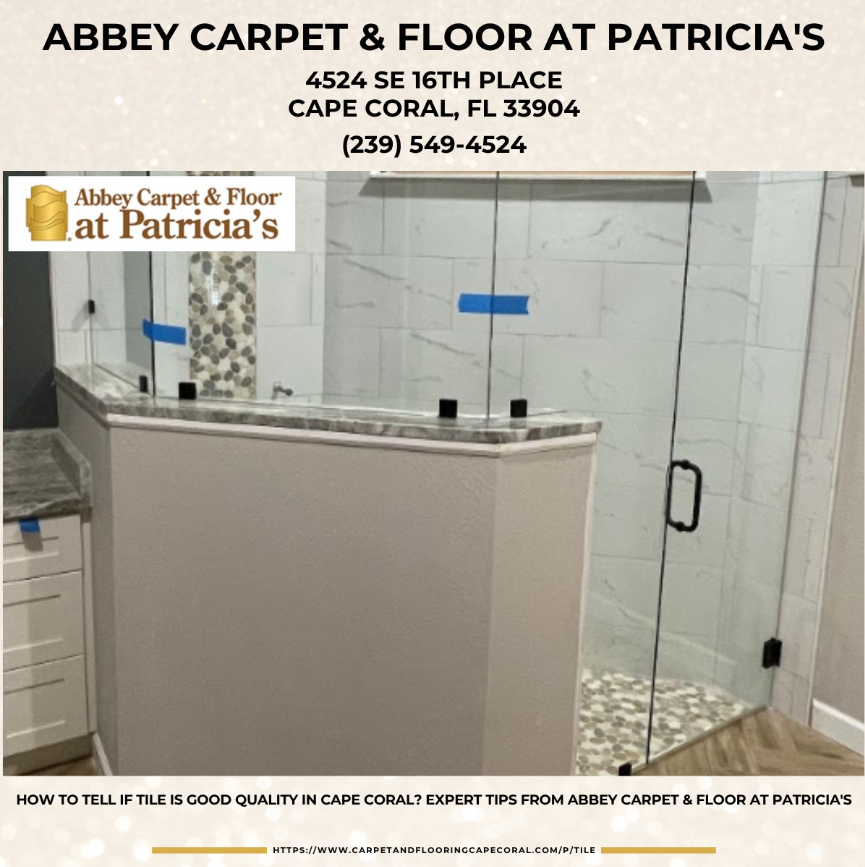
Good-quality tile has a consistent body, a flat surface, tight size and edge accuracy, and a rating that matches the room where it will be used. It also needs a proper installation behind it. If you can check those four things, you can tell a tile that will look great in ten years from one that will disappoint you in two.
The details matter more than most people expect, especially in Southwest Florida, where humidity, sandy feet, and big sliding doors put real demands on a floor. The team at Abbey Carpet & Floor at Patricia's helps homeowners sort through these questions every day, and what follows is the same checklist we would walk you through if you stopped by our Cape Coral showroom.
Why Tile Quality Matters More in Cape Coral
Tile is one of the most popular choices for Florida homes, and for good reason. It handles moisture well, stays cool underfoot, and cleans up easily after a beach day. But "tile" covers a huge range of products, and two tiles that look similar in a photo can perform very differently once they are on your floor.
A lower-quality tile might chip at the edges, vary in size from box to box, or show wear in a busy entryway. A well-made tile that is matched to the right room, then installed correctly, can look good for decades. That is why a trip to a knowledgeable tile store is worth the time. Handling samples in person tells you things a website never can.
Start With the Material: Porcelain, Ceramic, or Natural Stone
Quality begins with choosing the right type of tile for the job, because each material has its own strengths.
Porcelain Tile
Porcelain is made from dense clay fired at high temperatures, which makes it hard and very low in water absorption. That is why porcelain tile Cape Coral homeowners ask about it so often for kitchens, bathrooms, entryways, and whole-home flooring. It also comes in a wide range of looks, including stone-look, wood-look, concrete-look, and patterned designs, in matte or polished finishes and in large formats.
When you shop for porcelain floor tile, check that the product is rated for floor use and look at how the color runs through the tile. If the glaze chips, you will see what is underneath. Some porcelain has a body color close to the surface color, which hides small chips well. Others have a very different body color, and you will see every nick.
Ceramic Tile
Ceramic tile is typically a bit softer and more porous than porcelain, which makes it a great fit for walls, backsplashes, and bathroom applications, and for some lighter-traffic floors. If you are exploring ceramic tile Cape Coral options, ask about the intended use of each product. A ceramic wall tile may not be suitable for a floor, and a good salesperson will tell you that up front rather than sell you something that will not hold up.
Natural Stone Tile
Natural stone, such as marble, travertine, or slate, brings beauty that manufactured tile cannot exactly copy. Every piece is different, which is part of the charm. For natural stone tile Cape Coral projects, "quality" means something slightly different: you are judging the consistency of the cut, the thickness, and how well the stone has been finished. You also need to be ready for ongoing care. Stone often needs sealing and specific cleaners, and some stones, such as polished marble, can etch with acidic products. Ask what upkeep to expect before you commit.
Check the Ratings, Not Just the Look
Appearance is the fun part, but the technical ratings are how you separate a durable tile from a pretty one. You do not need to memorize standards, but you should know what to look for on the box or spec sheet.
Intended use. Manufacturers label whether a tile is meant for floors, walls, or both. A wall-only tile on a floor is one of the most common and most avoidable mistakes.
PEI rating (for glazed tile). This rating describes surface wear resistance on a scale of 1 to 5. In general, lower ratings suit walls and light-use areas, while higher ratings are made for heavier foot traffic. For a typical home, a mid-range rating is often enough for living areas, while entryways and high-traffic spaces may call for something sturdier. A showroom professional can match the rating to your household.
Water absorption. Porcelain is generally defined as having very low water absorption, which is part of why it performs well in wet or humid conditions. If you are choosing tile for a bathroom, a covered lanai, or a laundry room, this is a spec worth asking about.
Slip resistance. For floors that may get wet, such as bathrooms, showers, and entryways, look for a slip-resistance rating on the product information. A highly polished tile can look lovely but feel slick when wet, so finish matters as much as color.
If a product has no clear specs, or the seller cannot tell you what it is rated for, treat that as a warning sign.
Do a Hands-On Inspection
Specs are half the story. The other half is what you can see and feel. When you are standing in a tile showroom Cape Coral shoppers can walk through, try these simple checks.
Look at the Edges and Corners
Pick up a tile and look along the edges. They should be crisp and consistent, without chips, rough spots, or uneven glaze. Rectified tile, which is cut after firing for very precise edges, allows for narrower grout lines and a cleaner look, which is one reason it is so popular for large-format porcelain.
Check the Flatness
Lay two tiles face to face, or set one on a flat surface, and look for rocking or gaps. Slight variation can be normal, particularly with some handmade or textured products, but significant warping makes installation harder and can leave uneven edges, known as lippage, that catch toes and look sloppy.
Compare Sizes
Put several tiles from the same box side by side. They should match closely. Big differences in size make straight grout lines nearly impossible, no matter how skilled the installer is.
Look at the Color and Shade Variation
Many modern tiles are made with intentional variation so the floor looks natural. That is good, but the variation should look deliberate and pleasing, not random. Ask to see more than one tile, or a larger sample board, so you can see the full range. Also keep in mind that all tile is made in production lots, and color can differ slightly between lots. That leads to a practical tip.
Do a Tap Test
Tap a tile gently with a knuckle or a coin. A solid, consistent sound suggests a dense, well-fired tile. A dull or hollow sound can point to a problem, though this works better as a general clue than a definitive test.
See Tile in the Right Light
One thing we tell customers all the time: do not pick tile based on a photo alone. Lighting changes everything. A gray that looks warm under showroom lights can look cooler in the bright Florida sun streaming through your windows, and a matte finish that seems subtle on a sample may look different across a whole room.
This is one of the main reasons visiting a tile store in person is so valuable. You can carry samples to the window, hold them next to your paint, cabinet, and countertop samples, and see how the texture reads from a standing height. Bringing your own materials to compare is one of the smartest things you can do. Photos of your space, a paint chip, a cabinet door, or a countertop sample all help.
Match the Tile to the Room
Even an excellent tile can be a poor choice in the wrong place. Here is how we help Cape Coral homeowners think about common rooms.
Kitchens and backsplashes. For floors, you want something durable and stain-conscious that is easy to clean. For backsplashes, you have more freedom: glossy ceramic, mosaics, and decorative patterns all work well, and you can focus on how they pair with your cabinetry and counters. If you are browsing for kitchen backsplash tile or a kitchen floor tile, bring your cabinet and countertop samples so you can see the combination.
Bathrooms and showers. Here, finish and rating matter most. Look for slip-conscious options for floors and think carefully about grout lines, since smaller tiles mean more grout and more cleaning. It is also worth saying plainly that tile alone does not make a wet area waterproof. Proper preparation and a correct installation system are what protect the walls and floors behind the tile. When you are selecting bathroom tile Cape Coral homes need, plan the installation just as carefully as the look.
Living areas and entryways. Wood-look porcelain, stone-look designs, and large-format tile are popular for good reason: they are tough, and they give you a consistent look from room to room. Entryways take the most abuse from sand, grit, and wet shoes, so choose a durable, textured option and think about how transitions to other flooring will look.
Don't Forget About Grout and Trim
A tile floor is not just tile. Grout, trim, and transitions all affect both the look and the lifespan of the finished project.
Grout color changes how the pattern reads. A matching grout tends to quiet the pattern, while a contrasting one highlights each tile. Light grout in a high-traffic area can show stains more easily, so talk through your lifestyle before choosing. Edge trim, bullnose pieces, and metal profiles finish off backsplashes, shower niches, and exposed edges, and they are much easier to plan for at the start than to add at the end.
If your project uses natural stone, ask about sealing both the stone and the grout, and what maintenance schedule makes sense.
The Installation Is Part of the Quality
This is the part many people overlook. Even the best tile can fail if it is installed poorly. Quality installation means:
Proper substrate preparation. The surface under your tile needs to be clean, flat, and sound. Skipping this is a common cause of cracked tile and failing grout.
Correct layout planning. A good installer thinks about where cuts will fall so you do not end up with thin slivers along a wall or a doorway.
Appropriate setting materials. Large-format tile and natural stone often need specific mortars and techniques.
Careful grout work and finishing. Consistent joints, clean edges, and tidy transitions are the details that make a floor look professional.
That is why professional tile installation Cape Coral homeowners rely on is as important as the tile you choose. At Abbey Carpet & Floor at Patricia's, installation support is part of the process, so the person helping you select your tile is working toward the same goal as the people installing it. Details such as scope, scheduling, and product type can be discussed during your consultation.
Order Enough, and From the Same Lot
Here is a practical tip that saves a lot of headaches. Always order extra tile to cover cuts, waste, and future repairs. A common rule of thumb is around 10 percent extra for straightforward layouts and more for diagonal patterns or large-format tile. Your installer or showroom consultant can give you a better figure once your layout is known.
Also confirm that your boxes come from the same production lot. Color and size can shift slightly between lots, and you do not want a visible difference halfway across your living room. Keeping a few spare tiles stored away is a smart move in case you ever need a repair.
Questions to Ask Any Tile Store
Whether you shop with us or elsewhere, a few questions will quickly show you how much a seller knows and how much they stand behind their products.
Is this tile rated for the area where I plan to use it?
What is the slip-resistance rating, and is it a good choice for wet areas?
Is the tile rectified, and what grout line do you recommend?
Is there shade variation, and can I see a larger display?
Will my boxes come from the same lot?
What setting materials and preparation does this tile need?
What care and cleaning does it require long term?
A good tile store will answer these clearly and without pressure. If you get vague responses, keep looking.
What to Bring When You Visit
You will get more from a showroom trip if you come prepared. Consider bringing:
Photos of your space and any inspiration images
Approximate room measurements, if you have them
Paint chips, cabinet samples, or countertop samples
A rough budget and timeline for your project
With that information, we can narrow down your choices and focus on tile that suits your home, your style, and the way you live. Many customers find that browsing first helps them feel confident before moving to measurements and pricing.
From Showroom to Finished Floor
The process at Abbey Carpet & Floor at Patricia's is designed to be simple:
Visit our Cape Coral tile showroom and see samples in person.
Choose your tile and finalize your design, including size, finish, grout, and trim.
Schedule a free in-home measure and estimate. Measuring supports accurate quantities, layout planning, and project pricing.
Enjoy a professionally installed tile floor or feature.
Because we are a local business, you are not working with a faceless website or a distant warehouse. You are working with people who know Southwest Florida homes and can sit down with you to compare options, answer questions, and plan the project from start to finish.
Tile Store FAQs
How can I tell if porcelain or ceramic tile is better for my project?
It depends on where the tile is going, how much traffic it will see, how much moisture it will face, and what look you want. Porcelain is often chosen for floors and wet areas because it is dense and durable, while ceramic is a popular choice for walls and backsplashes. Check each tile's rated use, and stop by for a consultation if you want help deciding.
Do you offer free in-home tile estimates in Cape Coral?
Yes, Abbey Carpet & Floor at Patricia's offers free in-home measuring and estimates for flooring projects. Reach out to confirm details for your specific tile project and location.
Do you provide professional tile installation?
Professional installation support is part of what we offer. Availability, project scope, scheduling, and product type can all be discussed during your consultation.
What should I bring to a tile store?
Inspiration photos, approximate room measurements, paint, cabinet, or countertop samples, plus your budget range and timeline, will help us guide you faster.
Visit Our Tile Store in Cape Coral, FL
Ready to see and feel the difference quality makes? Visit Abbey Carpet & Floor at Patricia's, your local tile store in Cape Coral, to compare ceramic, porcelain, natural stone, and decorative tile in person with real design guidance.
Abbey Carpet & Floor at Patricia's
4524 SE 16th Place, Cape Coral, FL 33904
Phone: (239) 549-4524
Call ahead for current showroom hours, or stop in to browse samples, ask questions, and request your free tile estimate. Whether you are updating a kitchen backsplash, remodeling a bathroom, or planning tile flooring throughout your home, we would love to help you find tile you will be happy with for years to come.
That is the real test of good tile: not just how it looks on day one, but how well it holds up, how easy it is to live with, and how confident you feel about the choice. Take your time, ask plenty of questions, and let a knowledgeable team help you get it right.