


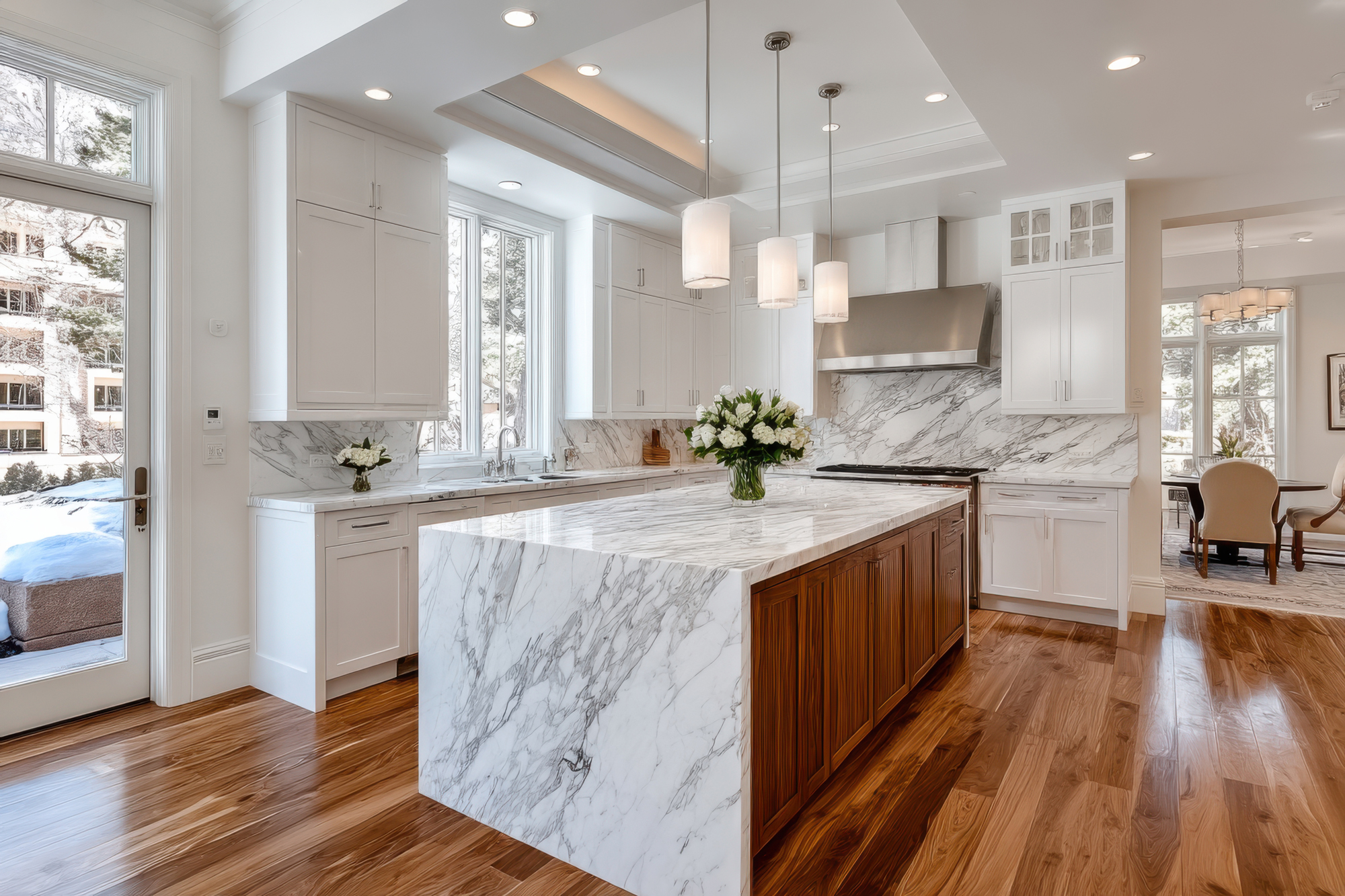
Scroll through enough home content and you will find the same claim repeated confidently, that putting hardwood in a kitchen is one of the most common renovation regrets. Homeowners arrive at Abbey Carpet & Floor at Patricia’s having read it, usually feeling like they have to abandon a look they genuinely wanted.
The claim is not wrong exactly, but it is stated far too absolutely. Hardwood in a kitchen succeeds or fails based on variables that rarely get mentioned in the articles making the warning, and most of those variables are about the household rather than the room.
Where the Mistake Reputation Came From
The concern is legitimate at its root. Water is the main threat to wood flooring, and a kitchen produces more water contact than almost any other room, from dishwasher leaks to dropped glasses to the slow drip nobody notices behind a fridge. Wood also dents more readily than tile or stone, and kitchens are where heavy things get dropped.
What gets lost is that these are risks rather than certainties, and they are risks that behave very differently depending on how a household actually runs. A kitchen where someone cooks seriously every night with kids underfoot is a genuinely different environment from a kitchen that sees light use and quick cleanups, even though both are called kitchens.
<br>
The Real Variable Is the Household Not the Room
Two kitchens with identical layouts can produce completely different outcomes with the same flooring. The deciding factors are how quickly spills get wiped, whether shoes come off at the door, whether there are large dogs, and whether the household notices a slow leak early or weeks later.
This is worth being honest with yourself about rather than optimistic. Someone who genuinely wipes up immediately and keeps on top of appliance maintenance will likely be very happy with hardwood in a kitchen for many years. Someone who knows their household is busier and messier than that is not failing at anything by choosing a different material for that specific room.
Construction Changes the Conversation
Much of the kitchen hardwood warning was formed around solid wood, which responds more noticeably to humidity and temperature swings by expanding and contracting. Engineered hardwood is built differently, with a real wood wear layer over a dimensionally stable core, and it generally handles those swings more predictably.
That stability matters in a Florida kitchen, where humidity is already elevated and cooking adds steam and heat cycles on top of it. Engineered construction does not make wood waterproof, and no amount of stability changes what standing water will eventually do, but it does meaningfully narrow the gap between the warning and the reality for many households.
What Actually Causes the Damage People Regret
The failures people write about are rarely caused by normal cooking. They come from unnoticed appliance leaks, dishwasher lines that fail slowly behind a cabinet, and refrigerator water connections that drip for weeks before anyone sees it. By the time the damage is visible, the wood has usually been wet for a long time.
This reframes the prevention entirely. Checking appliance connections periodically, using a drip tray under the dishwasher, and addressing any visible water promptly does far more to protect a hardwood kitchen floor than anything about the wood species itself. The finish matters too, since a well maintained finish is what keeps everyday splashes from reaching the wood at all.
When a Different Material Genuinely Makes More Sense
There are households where recommending hardwood in the kitchen would not be doing anyone a favor. Homes with several large dogs, households with very young children in the thick of the messiest years, and anyone who simply does not want to think about their floor are all better served elsewhere.
Luxury vinyl is the usual alternative for exactly this reason, since it handles everyday moisture without the same vigilance and now comes in wood looks convincing enough that the visual compromise is far smaller than it used to be. Tile remains the most water resistant option of all. Choosing one of these over hardwood in a kitchen is a practical decision about how you live, not a downgrade.
Visit Abbey Carpet & Floor at Patricia's
The honest answer is that hardwood in a kitchen is a reasonable choice for some households and the wrong choice for others, and a good conversation gets you to the right side of that line quickly. The team at Abbey Carpet & Floor at Patricia’s will tell you straight which one you are.
We proudly serve Cape Coral, FL, Fort Myers, FL, Iona, FL, North Fort Myers, FL, Sanibel, FL, Bonita Springs, FL, Estero, FL, Naples, FL, Punta Gorda, FL, and Fort Myers Beach, FL with options for every room and every kind of household. Visit one of Cape Coral, FL to compare hardwood flooring in person, or contact us to talk through what suits your kitchen.


