


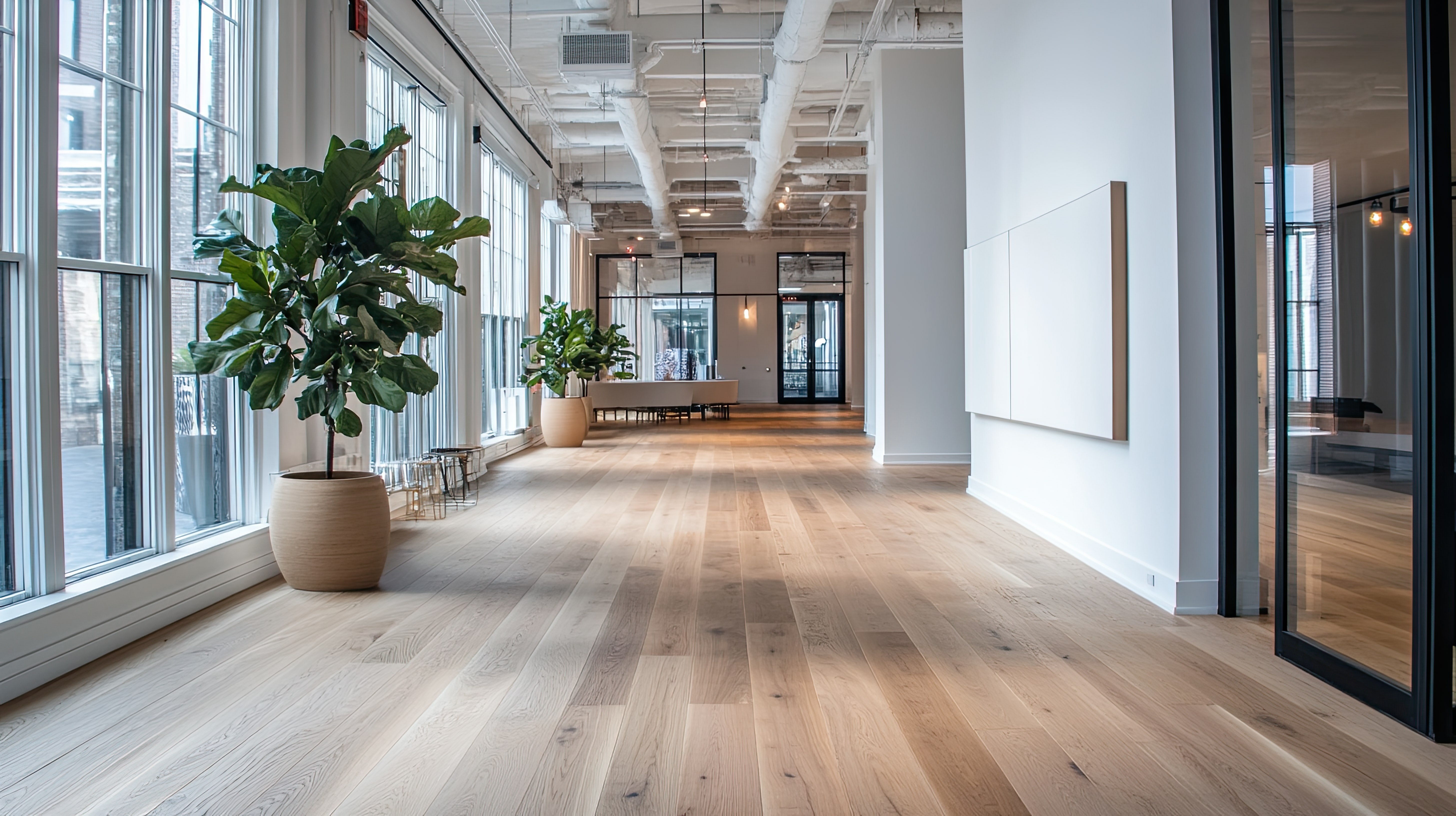
Short repeat patterns are one of the fastest ways a wood-look floor starts to feel artificial instead of natural.
This article explains how pattern repetition works, why it matters, and what to look for when choosing a more realistic floor.
Why this issue matters more than most homeowners realize
A lot of people know when a floor looks “off,” but they cannot always explain why. In many cases, it is not the color, the size of the plank, or even the sheen level. It is the repeat pattern. When the same grain image appears again and again within a short stretch of floor, the eye catches on quickly. Once that repetition becomes visible, the floor stops reading like wood and starts reading like a printed product.
This matters even more in homes with open sightlines, larger living areas, or strong natural light. In many Cape Coral homes, the floor is visible across long uninterrupted spans, which gives the eye more opportunity to detect duplication. What may seem acceptable on a small sample board can feel noticeably artificial once it is installed wall to wall.
What the 6-foot board illusion actually means
The phrase refers to the visual moment when you start seeing the same plank image repeat too soon. In lower-end wood-look vinyl and laminate products, manufacturers often work with a limited number of printed plank visuals. That means the same knot pattern, grain sweep, or tonal variation may repeat every few boards. In practical terms, the pattern cycle may restart within about six feet, which is where the illusion begins to break down.
Real hardwood does not behave this way. Even within the same species and finish, natural boards carry inconsistent grain movement, subtle variation, and irregular character marks. That randomness is part of what makes real wood feel layered and believable. A short repeat pattern removes that unpredictability and replaces it with something the brain reads as manufactured.
Why short repeat patterns make floors look cheaper
The biggest problem with short repeats is not only repetition itself, but the speed at which the eye registers it. Once identical planks appear in the same field of vision, the floor begins to flatten visually. Instead of feeling organic, it starts to feel staged. This tends to happen especially fast in rooms with long runs, wide layouts, and direct daylight.
There is also a second problem. Repetition often creates unintended visual stacking. Similar boards can line up in ways that create blocks, stripes, or mirrored sections across the floor. Even if the installer staggers the boards correctly, the printed visuals can still form a pattern that feels too controlled. That is why some floors look acceptable in a showroom but noticeably lower-end in a finished home.
The technical reason some wood-look floors feel more realistic
A more realistic floor usually starts with more unique plank visuals. Better vinyl flooring products often include a larger image bank, which means the same printed board does not come around as often. This gives the floor more visual depth and reduces the chance of obvious duplication in the same room.
Texture also matters. Embossed-in-register surfaces, often shortened to EIR, align the surface texture with the printed grain pattern underneath. That means the knots, ridges, and grain lines you see are more likely to match what you feel underfoot. Without that alignment, the surface can look flat or generic even if the printed image itself is decent. Realism comes from the combination of image variation, plank size, and texture accuracy rather than from color alone.
Why samples can be misleading
One of the most common mistakes in flooring selection is judging a product from a small hand sample. A single sample often shows only one or two visuals, so it hides how quickly the design repeats across a full room. A floor can look great in a sample board and still become visually repetitive once dozens of planks are laid out.
That is why it helps to view several full planks together before making a decision. When possible, ask to see a larger display or a full carton opened up. Looking at multiple boards side by side gives a more realistic sense of tonal variation, pattern diversity, and how believable the product will feel in a finished installation. This is especially important for homeowners trying to create a clean, high-end look rather than a builder-grade result.
How layout and installation affect the final result
Even a strong product can lose some of its realism if the layout is poorly handled. If similar boards are placed too close together, the pattern repetition becomes more noticeable. A skilled installer will pay attention not just to stagger spacing, but also to visual distribution across the room. That becomes especially important in open-concept areas where several rooms connect and the floor reads as one continuous surface.
Plank direction also plays a role. Running the floor in a direction that supports the room’s proportions can make the pattern feel more natural and less compressed. In some homes, longer planks with better visual variation help create a calmer, more expansive effect. In others, the wrong layout can make the floor feel busy or overly repetitive, even if the material itself is decent.
How to choose a wood-look floor that feels more natural
A good place to start is by asking better questions than just what color looks best. Look at how many unique visuals the product offers, whether the texture aligns with the printed grain, and how the floor appears under both natural and artificial light. Notice whether the pattern feels random or whether certain grain marks keep appearing again and again.
It also helps to think beyond trends. Some floors photograph well but do not hold up visually over time because their realism is weak from the start. A more convincing wood-look floor usually has a quieter, more layered appearance that feels believable at a glance and continues to feel believable after months or years of everyday use. That kind of realism tends to age better and support a broader range of interior styles.
If a wood-look floor feels slightly artificial, there is usually a technical reason behind that reaction. Short repeat patterns, limited plank visuals, and weak surface detailing can all make a floor look less natural once it is installed across a full room. Paying attention to those details up front can make a major difference in how refined the finished space feels.
At Abbey Carpet & Floor at Patricia’s, we help homeowners compare flooring in a way that goes beyond color alone. Visit Cape Coral, FL to explore options for homes across Cape Coral, FL, Fort Myers, FL, Iona, FL, North Fort Myers, FL, Sanibel, FL, Bonita Springs, FL, Estero, FL, Naples, FL, Punta Gorda, FL, and Fort Myers Beach, FL, and contact us today for help finding a floor that looks more natural, performs well, and feels right in your space.


