


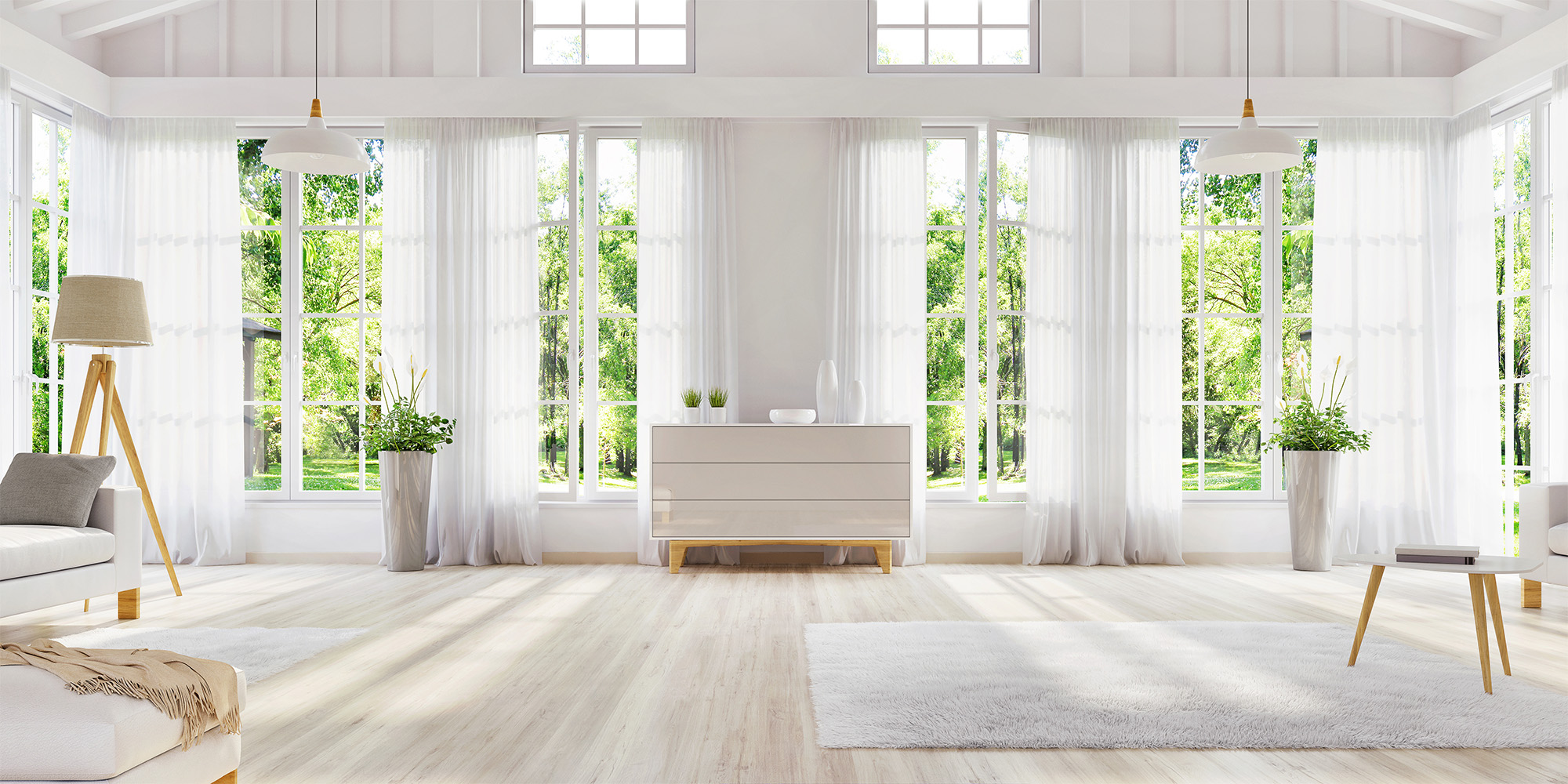
Few claims get tossed around as loosely as fade proof, and few climates test it as hard as ours. Between long daylight hours, high UV intensity, and the wall-to-wall glass sliders that define Florida homes, a floor here absorbs far more light energy than the same floor would up north. Understanding what that light actually does is the difference between a floor that ages gracefully and one that shows a sharp line where the rug used to sit.
At Abbey Carpet & Floor at Patricia’s we get this question constantly, so here is the honest, technical answer rather than the marketing version.
Why Florida Light Is Harder on Floors
It is not only the strength of the sun, it is the duration and the architecture. Our homes are designed to pull light in through expansive sliders and transom windows, which means large stretches of floor sit in direct or near-direct sun for hours every day. That sustained exposure is what drives color change, far more than the occasional bright afternoon a northern home might see.
The result is gradual and easy to miss until you move furniture. Shift a console or lift an area rug after a couple of years and you can find a clean outline where the covered floor kept its original tone while everything around it changed. The light did not damage the floor so much as it quietly rewrote its color.
Hardwood Ambers, It Does Not Fade the Way You Think
Real wood does not simply lose color, it changes color through a natural photo-reaction in the wood itself. Many species amber or deepen with sun exposure, and a few do the opposite and lighten. American cherry and Brazilian cherry are famous for darkening dramatically, while white oak is far more stable and forgiving, which is one reason it has become the go-to for sunny, modern interiors.
It is worth knowing that a hardwood's surface finish, even a tough aluminum-oxide one, protects against scratches and wear but does not block UV from reaching the wood. So the species you choose, not just the finish, determines how your floor will look in three years. If a room is flooded with light, choosing a stable species up front saves you from chasing an even tone later.
How Vinyl and Laminate Actually Resist Fade
This is where engineered products have a real advantage. Quality luxury vinyl and laminate build UV inhibitors directly into the clear wear layer, and better lines are tested against standards like ASTM color-fastness benchmarks to back up their fade claims. The printed design film is shielded from the light that would otherwise wash it out.
The catch is that this protection scales with quality. A budget plank with a thin wear layer and minimal UV package can and will fade in a bright Florida room, regardless of what the box says. When a sun-soaked space is the concern, fade performance is one more reason to read the spec sheet and choose a reputable, properly rated product rather than the cheapest look-alike.
Practical Protection That Actually Helps
A few habits and upgrades meaningfully extend any floor's color life:
Rotate area rugs and furniture periodically so no single patch stays covered or exposed for years.
Add UV-filtering film or Low-E glass to your sunniest sliders to cut the most damaging wavelengths.
Use sheers or solar shades during peak afternoon hours in the rooms that take the most direct light.
Fade proof is rarely absolute, but fade resistant is very achievable when you match the right material to the right room and protect it sensibly. Tell us which rooms get the worst of the sun, and we will steer you toward species and products that hold their color in our climate. We proudly serve Cape Coral, FL, Fort Myers, FL, Iona, FL, North Fort Myers, FL, Sanibel, FL, Bonita Springs, FL, Estero, FL, Naples, FL, Punta Gorda, FL, and Fort Myers Beach, FL.
See how different woods and vinyls handle light at Cape Coral, FL, or contact us today for a free in-home estimate tailored to your sunniest spaces.


